
Searching Screven County Criminal Dockets
Court class comes first. The Georgia Courts E-Access directory routes Screven County Superior and State Court users to PeachCourt. It is a routing page, not a single free statewide index. PeachCourt asks you to create an account before running any docket search. Bring the full case number if you have it. Court class, punctuation, and leading zeroes all affect what comes back.
When the online route stalls, call or visit Mandy B. Howard's Clerk of Court office. The counter holds the official Screven County criminal docket for Superior and State matters. A written request should name the court, the case number, and the exact document you want. Ask for a certified disposition when authentication matters. City citations stay with the issuing municipal court. Restricted juvenile matters do not appear in an ordinary public search.
- Identify Superior, State, Juvenile, or municipal court.
- Choose Screven County and the exact PeachCourt court.
- Enter the complete case number or permitted party fields.
- Read the event history, disposition, and judgment.
- Call the clerk for a missing case, image, setting, or certified copy.
Screven Felony Docket Path
Screven County Superior Court hears felony trials and their major pleadings. Mandy B. Howard's unified clerk office keeps those filings. PeachCourt serves double duty here. It is the mandatory e-filing provider listed for this court and its public access route. Those are two different services, though. A filing can reach the clerk electronically while the image itself stays fee-gated, redacted, or restricted.
Expect to see an indictment or accusation, arraignment, motions, a plea or trial, sentencing, and any notice of appeal. Each docket line is only a short index entry. It may not state every term in the signed order. When the site shows just an event or document icon, do not read the short text as the full ruling. Request the named record from the clerk.
Inside a Screven County Criminal Docket
A Screven County criminal docket pairs a case header with a dated event history. PeachCourt offers the official access route, and its own support pages describe what a reader will see. Case-number formats vary, so copy the number exactly as the clerk issued it rather than guessing at a local coding pattern.
| Header | Court, county, case number, type, filed date, status, division, and judge. |
|---|---|
| Charges | Count, description, accusation or indictment reference, and public bond information. |
| Events | Filed and entered dates, document type, docket text, and filing party. |
| Hearings | Arraignment, plea, bond, pretrial, trial, sentencing, continuance, and reset. |
| Outcome | Plea, dismissal, verdict, judgment, appeal, and closure status. |
| Images | Orders, charging papers, motions, judgments, or transcripts, subject to access limits. |
A charge is an allegation, not a finding. "Disposed" means the case ended, not how it ended. Read the disposition and signed judgment before drawing any conclusion.
Screven Criminal Docket Terms
Georgia criminal records lean on short terms that mark each procedural step. They help a reader follow the Screven County criminal docket, but the signed order always controls. Confirm unfamiliar local codes with the clerk.
- Accusation
- A charging paper often used in State Court misdemeanor cases.
- Indictment
- A grand-jury charging document commonly linked to a Superior Court felony.
- Arraignment
- The stage when charges are read and a plea is entered or set.
- Continuance or reset
- A setting moved to another date; the old date may remain in history.
- Disposition
- The way a charge ended, such as dismissal, plea, verdict, or judgment.
A motion entry is a request, not a ruling. A warrant is not a conviction, and a payment status is not the full history.
How a Criminal Case Moves
Early entries name the charge and the court. Superior cases may show an indictment before arraignment. State Court matters often begin with an accusation or citation. From there, motions, bond events, and hearing notices build the dated record. A plea or trial produces disposition and sentencing entries. An appeal adds a stage. It does not erase the trial history.
Screven County criminal docket flow: Filing › Arraignment › Pretrial › Plea or Trial › Disposition › Sentencing.
A reset keeps the older event on the record. It also moves the live date. A sentence may reference terms held in a separate document. For proof of outcome, ask the clerk for the signed judgment or a certified disposition. A screen print lacks the certificate and seal.
Note: Confirm every active setting with the Screven clerk. A reset may post after an older calendar or mailed notice went out.
Screven Misdemeanor Docket Route
State Court of Screven County handles misdemeanors and traffic matters. It also covers warrants and preliminary criminal proceedings. The office shares Mandy B. Howard's clerk structure with Superior Court, but their dockets remain separate. The PeachCourt court selection still matters. Call State Court at (912) 564-7601; the main clerk line is (912) 564-2614.
| Route | Typical matter | Record source |
|---|---|---|
| Superior Court | Felony trials and major pleadings | PeachCourt or Clerk of Court |
| State Court | Misdemeanors, traffic, and warrants | PeachCourt or unified clerk |
| Municipal court | City ordinance and traffic cases | Issuing city court |
| Juvenile Court | Delinquency matters | Restricted clerk process |
A payment portal takes payments. It does not replace the chronological Screven County criminal docket or show which court owns a matter.
Courts That Hold Criminal Dockets
The offense level and the issuing agency point you to the right Screven County court. Superior Court is the felony forum. State Court covers misdemeanors and traffic within its authority. Each municipality keeps its own ordinance and traffic route. Juvenile Court handles alleged delinquency under limited public access. One failed portal search does not prove a case is absent.
Law-enforcement records are a different animal. The Sheriff or issuing agency may hold an incident or arrest record, while the clerk holds the filed court docket. Evidence and transcripts can sit elsewhere. A precise request names the court document rather than asking one office for everything tied to an event.
The Ogeechee Judicial Circuit directory identifies the Screven clerk, court programs, and calendar warning. It helps route a search, but the county clerk keeps the official case file.
Screven Restriction Is Not Sealing
Two different things happen when a Georgia criminal history gets cleaned up. O.C.G.A. §35-3-37 governs GCIC restriction, which works on the state's criminal-history system. Georgia Courts warns that restriction does not necessarily remove the matching Screven County court file. The docket can stay open. Superior Court Rule 21 offers a separate route. It can limit access to a court record or part of it. The official GBI criminal-history guidance shows that split plainly. One process touches a state database. The clerk's docket is another matter.
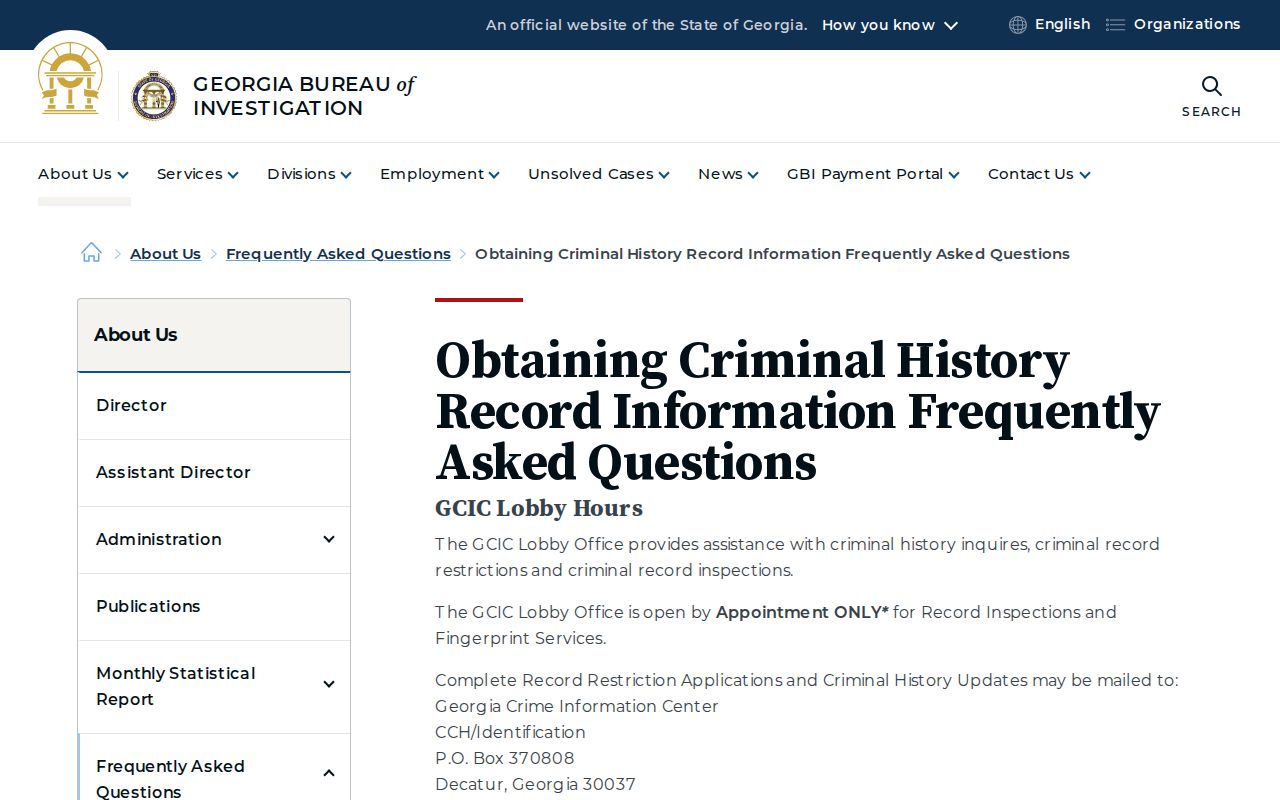
What that agency page describes is a records-system process, not a Screven criminal docket search. For a ruling on access to a court file, or a certified outcome, contact the clerk.
Sealed Dockets and Public Access
Adult Superior Court records start with a presumption of public access. Law, court rules, and orders can still limit a file. A case may stay indexed even while one image is redacted, so the docket shows the case but hides a piece of it. The Georgia Open Records Act reaches existing government records. It cannot override a seal or force a new report into being.
Key access rules:
Uniform Superior Court Rule 21 starts with public access and provides a tailored restriction process.
O.C.G.A. §§50-18-70 and 50-18-71 govern requests for identifiable existing records.
Georgia juvenile access law limits ordinary public access to juvenile files.
The official juvenile opinion supplies the assigned Screven County criminal docket image below.
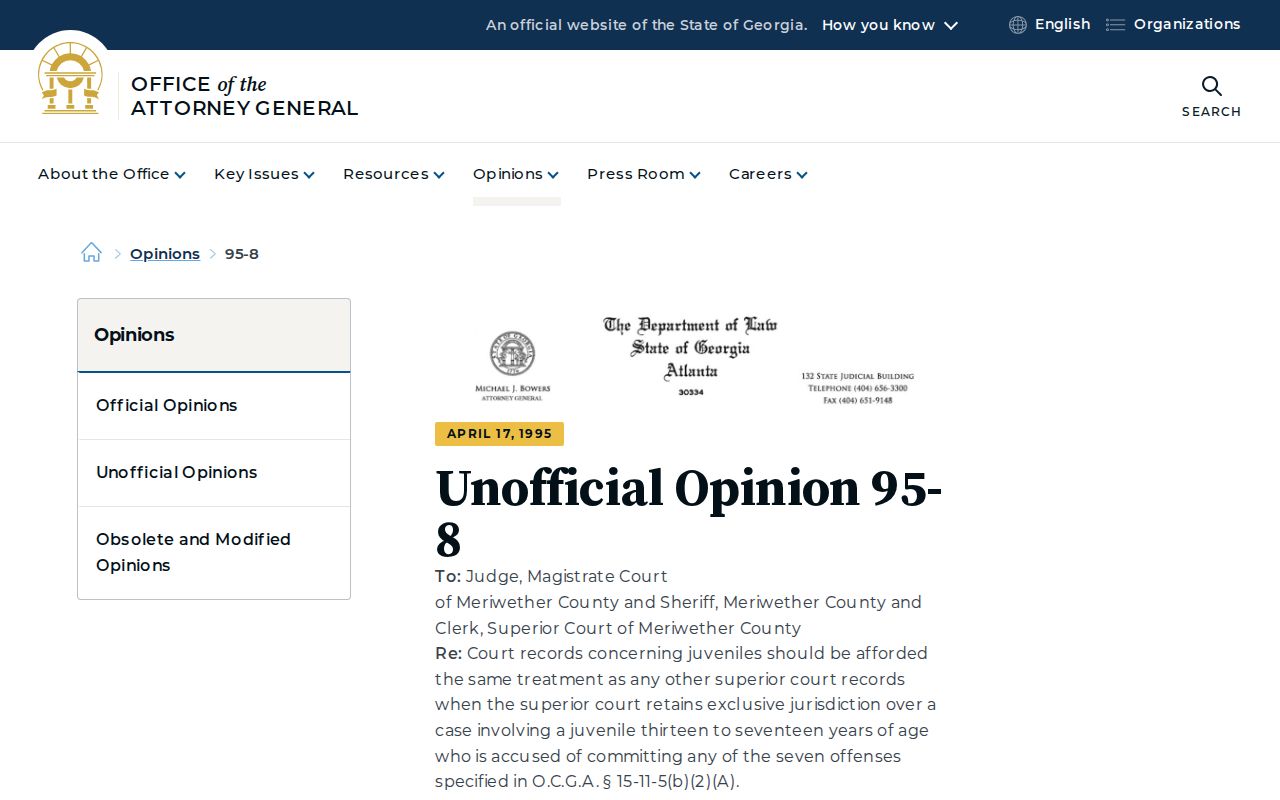
When you call about a sealed or limited file, the clerk will ask which document you want and whether a redacted public copy exists. Know the difference among "sealed," "restricted," "redacted," and "not found" before you ask.
Certified Screven Criminal Dispositions
A certified disposition is the formal route when an outcome must be shown. Give the clerk the exact court, case number, and document name. Ask whether mail, fax, or email is accepted. Ask what payment method applies and what certification charge is due. The clerk takes written and counter requests. It posts no public terminal and no single fixed online copy price. Ask for a quote on the actual Screven County criminal docket record.
PeachCourt images may carry a vendor fee. That fee does not change who holds the official record. Georgia's general Open Records Act baseline and court-clerk schedules can differ. Get the number before you pay. Do not send more personal data than the clerk needs.
If an image is unavailable, write down the court name and the exact case number. Those details give the clerk a far better start. That is safer than a cropped screen or an unofficial result.